


The consequences of the COVID-19 pandemic are legion. Many people around the world have tragically died, and families and friends are grieving their unexpected departure. Others have fallen ill and are taking a long time to recover. A great number of people fell ill and have recovered. The majority, however, have not been infected, though their lives have been profoundly affected. We are now all striving towards physical, mental and community wellness, and a return to normality. We are preparing to face the challenges of daily life that sustain our health, however demanding these may be.
In its quest to stay safe, the entire planet has suspended its everyday activities, except those on which lives depend.
As we come to the end of May 2020, the situation in the UK seems to be easing, and we are trying to get over the shock and fear the coronavirus has generated. Most of us have been frightened in one way or another because we have been confronted with an unforeseen catastrophe. Many of us became distressed and helpless, as the rhythm and flow of our daily lives were interrupted. The aim is now health for all. Everyone is doing their best, quietly and with dignity, to heal the wounds. We care for each other and feel concern for our families, friends, and strangers. This is expressed in different ways by different people.

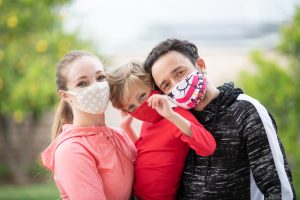
Some pay scrupulous attention to the wearing of face masks because they believe they are protecting themselves and those around them; others do not, because they feel the need and importance to be normal. However we choose to behave, we all want to contribute to wellbeing, and we all are taking chances with our choices. There is no doubt that we are all trying hard to combat the odd and the unnatural.
We, as individuals, listen to our reason, to the experts’ advise, and to our leaders’ advise; we also listen to our common sense, knowledge, and instincts. However, the latter cannot always be acted upon. We try our best under the circumstances. In our striving towards health and wellbeing, we need to be cautious about acting unwittingly. Stopping the whole world at once may have more than just economic consequences. For instance, spraying whole towns with chemicals may prevent the spread of the virus, but may also harm nature in ways unbeknown to us.
Whatever we do to protect ourselves from the spread of the infectious disease, we also need to remember to protect ourselves from becoming abnormal. We need to stay normal. Self – discipline and self – protection are crucial in the fight against COVID-19. Acquiring new hygiene habits is a necessity, and being able to avoid the excesses of those habits at the right time is an art. Human interaction is an everyday and vital commodity for wellbeing, and it must not be damaged by long-term social distancing. We must embrace the reasoning and actions that are required from us to stop the spread of the disease, but we must also remember the need to move towards what is normal, virtuous, and healthy.
Indeed, we need to be considerate towards those who want to be active and creative during lockdown and those who just want to make sure that they get through the day, as Julia Giannini, the Head of Sustainability ITV, pointed out during her interview with Julie Reid, on planetShine’s Talks on Life and Lockdown: “ As a society we go through a communal mourning and a communal shock and it is OK to feel you cannot achieve anything else than: get up, get through the day, go to bed in the evening and still be OK and still be in one piece.” “…There is so much more to take from sitting back and just living in the moment.”(watch the video below)
We need to be respectful of, or at least tolerant towards, each other’s responses to the situation, and to be slow to criticise and judge.
Normal is where health is, and this is the direction to go. Observing ethics helps us to guide us there. This is where our wellness is and this is where and when life carries on; this is where our values are, protecting us and giving us a good quality of life; this is where we can feel happy and content. This is where the good world is. This is where our wellbeing is.

The UK put its population into self-isolation and suspension of activities due to coronavirus on 23rd of March 2020. The unprecedented pandemic situation saw governments around the world taking similar steps to attempt to minimise the spread of the virus. While the majority of people, here in the UK, stayed at home, with the exception of key workers, the majority of shops, restaurants, schools, offices, factories, and airports were shut down. Now, after almost seven weeks, some businesses are slowly reopening, while others remain shut. But could this break in continuity in doing our jobs and/or using vital equipment on a daily basis pose the danger of rusty returns syndrome? Seven weeks is not a long time, one might argue. However, there are many activities or disciplines that require agility and alertness; and our being out of practice does them no good. There are drivers not driving cars on motorways; pilots not flying aeroplanes; workers not using complex machinery in factories; surgeons not performing complicated surgeries. Not doing these activities over too long a time can make the people who usually do them a little rusty on their return.
All around the globe, activities conducted on a daily basis suddenly stopped. Rows of aeroplanes have been parked away, no longer in use. British Airways fleet comprises 311* aeroplanes, but 96% of all passenger flights are currently not operating. In their factories, businesses have suspended the operation of great swathes of machinery, as Jaguar Land Rover did in March 2020**.


And a great number of private cars around the country have been parked and are not being driven. What happens to all of them while they are not being used? They get rusty and impaired.
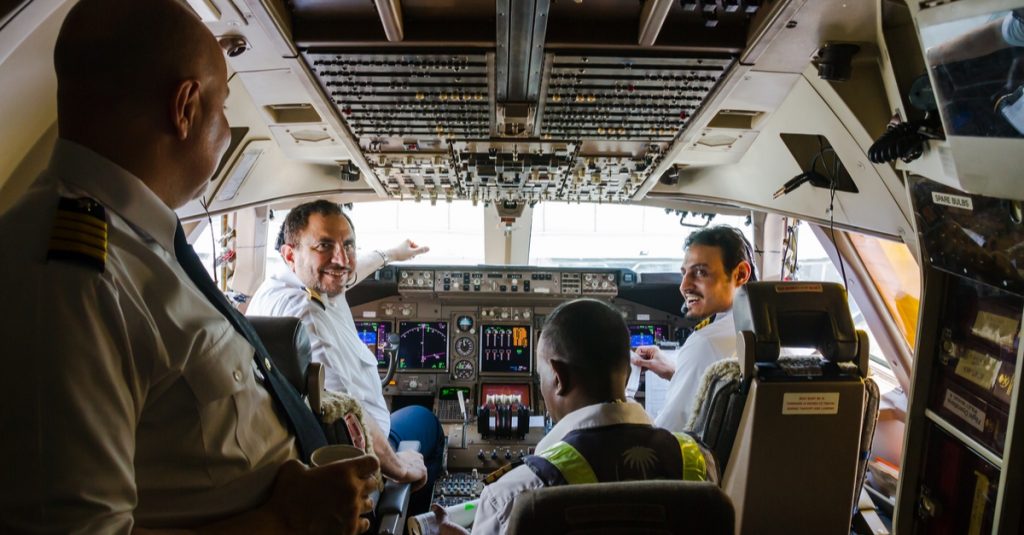
As well as machines not being used, many skills that require to be exercised daily are becoming impaired and out of practice too. Aircraft pilots who used to fly every day have not flown for the last seven weeks. The mechanics, engineers and technicians who maintain their planes on a daily basis, have not seen an aeroplane’s engine for a while. Air traffic controllers have not seen an aeroplane for a similar length of time; while the same air-traffic controllers who guide the same planes to safety are no longer in a position having to maintain the same levels of alertness on a daily basis while in lockdown. The drivers of those undriven cars have not been on motorways for some time either. Surgeons who once performed complicated and detailed surgery are no longer exercising the concentration of mind and steady hands that are vital elements of their medical skills. And children, for whom seven weeks is a very long time, are out of practice in terms of the daily collective discipline of the classroom, so important in the process of education; and they are no longer exercising the same levels of alertness and intensive concentration required for regular reading, writing and mathematics. The list of possibly impaired skills as a result of prolonging the self-isolation period is endless.
There are also rusty syndromes on the emotional level, especially those involving being separated from elderly members of the family or those with specific health conditions. Seeing these people in person is an important part of our lives. Not seeing them, worrying about them and not being able to do anything about it causes pain and feeling of helplessness. Our deepest feelings are being forcibly quashed.
The consequences of suspending aspects of lives are enormous. As the saying goes: “Use it or lose it”. However protective the practice of isolation due to coronavirus pandemic is, the very suspension of activities leads to consequences that will make returning to them that much more difficult and, in some cases, possibly much less safe. It is best to avoid getting rusty.
*www.britishairways.com/Fleet facts
** https://www.bmmagazine.co.uk
As to a professional, fully qualified beauty therapist, the issue of maintaining hygiene comes easily to me. Adequate hygiene is the first principle of providing beauty care treatments and services.

In a beauty salon.
The Oxford English dictionary defines hygiene as: “Conditions or practices conductive to maintaining health and preventing disease, especially through cleanliness”
From a beauty therapist’s point of view, hygiene is a science that deals with a healthful living. It applies to both personal and public hygiene. Public hygiene or sanitation refers to the steps taken by authorities to promote health of the general public.
The authorities have measures in place to ensure clean air, uncontaminated food and water, adequate sewerage infrastructure. They are also responsible for controlling disease and providing adequate medical facilities.
Hygiene on personal level from the beauty care point of view, is concerned with thoughtful care being taken by an individual to preserve their health and that of others, by following rules of healthy living such as: cleanliness, oral hygiene, good posture, sufficient exercise, adequate sleep, a balanced diet and health-giving thoughts.
Some beauty problems may be seen as signs of health problems, for example sluggish circulation, lack of fresh air, improper diet. To maintain or improve your health and appearance, according to beauty therapy science, you need to follow hygienic rules of living. These rules have been developed as a result of the collection of knowledge and experience over long period of time.
These rules of hygiene include advise on eating well balanced meals at regular intervals, consisting of enough of the right kind of foods that will keep your immune system more resistant, and drinking sufficiently in order to stay hydrated. Practicing exercise and recreation leads to the improvement of the body’s better absorption of food and better blood circulation, which in turn provides more oxygen to the body. A recommended moderate amount of sunshine adds vigour and helps to supply body with essential vitamin D.*
Fatigue caused by work, exercise, mental effort or worry should be followed by period of rest and relaxation. Overexertion and lack of rest tend to drain the body of its vitality as well as inactivity can deprive the body of its energy. An adequate 7 hours, so called, a beauty sleep, is recommended to recover. This advice comes from the beauty industry.
To maintain health and healthy living there are general guide rules provided by NHS in UK.
That include:
- Wash your body often. If possible, have shower or bath every day.
- Clean your teeth for two minutes twice a day.
- Wash hair with shampoo, frequency depends on type of your hair.
- Wash your hands before and after eating or touching food, after using the toilet, after sneezing/coughing and after touching pets.
- Wear clean cloth that are washed regularly.
- Turn away from other people and cover the nose and mouth with a tissue or hand when coughing or sneezing. If this is not done droplets that come from nose and mouth will be spread in the air and other people can breathe them in, or the droplets can get onto food.
These are general rules, understood and practiced, which will keep an individual healthy in everyday life under normal circumstances.
We also understand, that when we are visiting an ill person in a hospital, we need to take an extra care observing the rules of hygiene. We may be asked to sanitise our hands before entering the ward, to wear a face mask and protective gloves, or not to sit on the patient’s bed. If we observe that some hygiene care rules are relaxed in that hospital, we have the right to complain about it to the right authorities.
The Coronavirus (COVID-19) sickness caused by SARS-Cov-2 virus is an infectious disease. It is not contained, for now, and it is spreading currently outside hospitals. The infection can be picked up in public places through infected surfaces or droplets that come out from mouth or nose when an infected person coughs or sneezes. The latest scientific information indicate that the novel coronavirus can also be airborne. In study published March 18, 2020, in the New England Journal of Medicine, researchers found that SARS-Cov-2 remains contagious in aerosols, like droplets from coughing, for three hours (that research was done in a highly controlled laboratory setting). According to Dr.Harvey Fineberg MD,PhD,** “particles may travel through and linger in the air simply by talking or breathing near someone…So, viral particles could hang around even without the force of a cough or sneeze behind them.” Experts just don’t know yet for how long the aerosol droplets linger in the air**. The disease is there. We feel shocked and helpless in face of what it does to our lives.
However, while faced with this situation, even if we do not have a medication yet at hand, we are not totally helpless. To help combat the disease that is paralysing our lives, we can observe the rules of hygiene scrupulously, this is our remedy for now, and by doing so control the spread of the virus. If we leave the virus long enough to lie there on surfaces or linger in the air, without transferring it through our actions into our bodies (which become its hosts), it will just wither away. The virus can only continue on being active when it infects an organism during crucial for its life – time (its own critical time, before the time is out).
By observing basic hygiene like washing our hands, remembering not to touch the openings of our body in ways that may be transferring the virus into the body, it will stay unattended until it withers away.
Wearing face masks in public places and looking after them adequately is a great aid in combating the virus. This type of preventive action minimises the risk of infection.

***This type of face mask is the only type that can help to protect from inhaling the coronavirus – Equivalent to N95 Face Mask
While wearing a face masks and protective gloves, keeping hands clean or wearing protective clothing can be essential in protecting ourselves and others from the infection. However, it is of essential importance how we dispose of these helpful tools when we take them off, so we do not spread the infection through wrongly handling used face masks, gloves, and protective clothing at the end of the day, after we have been relying on them for protection.
If we come across the virus during the day, while being outside, it can linger on our clothes, the shoes and on preventive face masks and gloves. On returning home, we should give careful thought as to how to enter the house in order to keep the virus out.
Shoes can be taken off. Coats can be kept by the door.
Personally, I wear a protective overall when I go out. On returning home I take it off outside the door along with my shoes, and take both straight to the bathroom, where I wash them to be ready for the next time I go out. I wash my face mask and my disposable gloves with very warm water and soap, regardless of whether I dispose of them or keep them to reuse.
According to WHO the coronavirus is killed in 56 degrees C, so using hot water where possible is advisable. I wash all my shopping and pour boiling water on raw fruit and vegetables before consuming them, although this is not what I would normally do. Taking these steps, I imagine – and somehow know – that I am successfully getting rid of the virus, if it is there
Yes, these are elaborate behaviours, and coming home now takes an extra half hour, but in my view, this is what needs to be done. Only then I feel I have done my best.
We do not deserve such an infectious disease caused by this virus, so why not use all my might and patience to stop it attacking our health, while I have the knowledge of the hygiene measures that can stop it.
Some people see wearing face masks as a declaration of belonging to some political orientation, and that alone discourages or stops them from using face masks as an effective protective measure.
If you understand, how hygiene works in fight against an infectious disease, then you will feel free and enthusiastic about using face masks as an additional protective measure for yourself and others, and it will make sense to do so.
Some experts see wearing face masks as effective, if not more, than social distancing, in fight against the virus.
There are three types of face masks. N95*** face mask, surgical face masks and DIY face masks. N95 type are the only type, that help to protect from inhaling the coronavirus because of the material they are made of and their fitting to the face shape. The other two type are mainly helping to prevent spreading the virus.
By observing personal hygiene and public hygiene. By not attending suspected contaminated surfaces for a specific length of time ( the virus stays on surfaces for only a limited period); by minimising the transfer of the virus from one surface to another and humans through restrictions on public movement, by wearing face masks (N95*** are most protective) and other protective clothing, by remembering not to transfer the virus by touching our faces with possibly infected hands (self-discipline), so we do not become the virus’ hosts; when we maintain these measures all at once for long enough, the virus should wither away, according to the information we have about it. This can be achieved through a joint effort, even if we need to go out, but remain vigilant about keeping it away from ourselves and others.
You can maintain social distancing by keeping apart 2 to 3 meters, by staying at home or by both wearing protective clothing when out and dealing with each other.
These preventive measures require us to observe the hygiene rules outlined above. Wearing face masks and protective gloves consistently, and only if adequately handling them when disposing of them or if re-using them, provides helpful and effective measure.
Keeping our bodies well looked after will help us to be resistant to infection, but if we are unfortunately infected, we will be that much stronger.
It is the time for looking after ourselves and others with a particular goal in mind: getting our lives back to normal.
*“Standard Textbook of Cosmetology” by Constance V. Kibbe
**Is Coronavirus Airborne? What to know About Whether Or Not COVID-19 Can Stay In The Air; www.womenshealthmag.com
By Lauren Krouse, April 6th 2020.
*** N95 – USA code www.usatoday.com DIY masks to fight coronavirus. But do they
actually work? By Lorenzo Reyes
****N95
KN95- China code
KF94- Korea code
FFP2- EU code including UK – they are basically almost the same, Aim to stop 95%, 94% of particles and droplets 0.3 microns in size.